

Written Waves of July 2026
Support is Always Welcome
Don't miss out on the chance to save while enjoying the quality and service you love. Keep an eye on this space for the latest updates and grab these amazing deals while they last!
Written Waves
Who Pays for the Current?
7/31/2026 @ 6:13 PM
Stand on the shoreline long enough, and you begin to notice something. Every wave that reaches your feet started somewhere far away. You may not see what created it, but you always feel its effects.
Electricity is beginning to feel the same way.
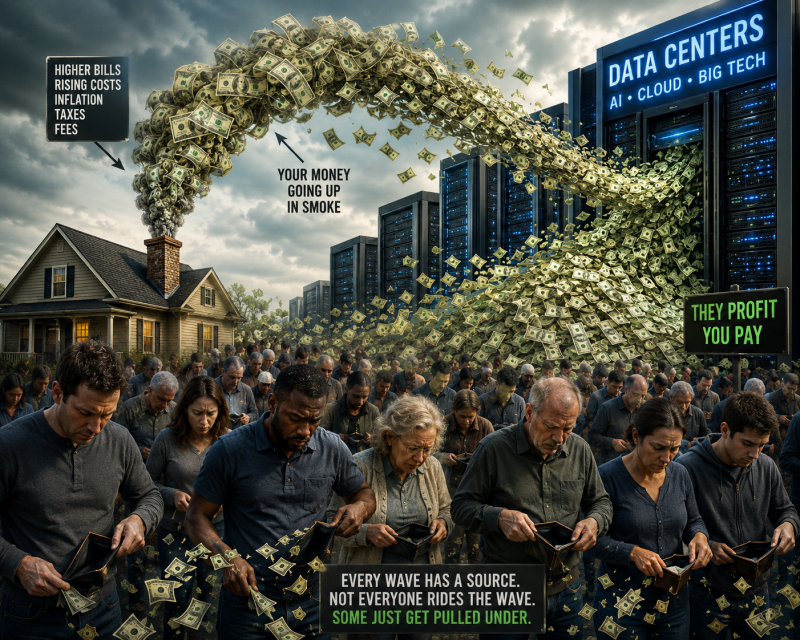
Artificial intelligence, cloud computing, cryptocurrency, and massive data centers are creating an enormous demand for electricity. Innovation is exciting, and technology has improved our lives in countless ways. But every new current requires energy, and someone eventually pays the bill.
Over the past several years, many families have watched their electric bills rise dramatically. Most households are not using 40% more electricity than they did just a few years ago. Yet many are paying substantially more. Businesses that depend on enormous computing power continue to expand, while families often have little choice but to absorb higher costs.
Imagine a canal connected to the ocean.
When the tide rises, water doesn't ask permission before flowing through the canal. It simply follows the path created by gravity. The businesses creating the greatest demand for electricity are like the rising tide. The current becomes stronger, and everyone floating in that canal feels its pull—even those who never caused it.
That isn't an argument against technology.
It's a reminder that every wave has consequences.
If industries profit from consuming enormous amounts of electricity, perhaps they should also invest more aggressively in discovering cleaner, more efficient ways to generate it. Wave energy, tidal power, improved battery storage, advanced nuclear technologies, and other scientific breakthroughs deserve continued research—not simply because they are good for business, but because they benefit everyone connected to the same electrical current.
The ocean teaches us that no wave exists by itself.
Every ripple eventually reaches another shore.
As artificial intelligence reshapes our future, perhaps our greatest innovation won't be creating machines that think faster. Perhaps it will be learning how to power that future without placing the greatest burden on the people simply trying to keep the lights on.
Every wave begins with a choice.
The question is whether we create waves that lift everyone—or currents that quietly pull the shoreline away beneath our feet.
What do you think? Please comment below: 👇 ✌️ ☮️

Written Waves
The Vacation We Never Planned
7/29/2026 @ 4:39 AM
On a warm summer day, I walked through downtown Kansas City near Broadway and 5th Street. Some people hurried to work, others were headed to lunch, and a few tourists wandered the sidewalks looking for something interesting to photograph. Then there were those who never seemed to be in a hurry at all.
They sat on park benches, under overpasses, and in the shade of buildings. Their backpacks held everything they owned. At first glance, it almost looked like they were living a permanent vacation. No alarm clocks. No bosses. No schedules.
As I began talking with a few of them, I discovered that appearances can be deceiving.
Some told me they wanted a different life but couldn't find a path back. Others admitted they chose this lifestyle because they struggled working for someone else or couldn't tolerate being told what to do for wages they felt weren't worth their freedom. My conversations were with only a handful of people, so they certainly don't represent everyone experiencing homelessness. Every story was different.
It made me wonder if homelessness exists on a spectrum. Some people are trapped by circumstances beyond their control. Others have made choices that led them there. And many are somewhere in between.
Freedom is an interesting word. We often picture it as having no responsibilities. But real freedom isn't simply the absence of rules. It also means having choices, opportunities, and hope for tomorrow.
A vacation is enjoyable because it eventually ends. We return home, back to our beds, our families, and our routines. Homelessness isn't a vacation. For many, it's a destination they never intended to reach.
Before judging someone on the street, remember that you probably don't know the chapter they're living. Some are fighting battles you'll never see. Others have accepted a life you may never understand.
The sidewalk tells only part of the story.

Written Waves:
Seeing What Was Always There
Revised
7/25/2026 @ 10:11 PM
There was a time when I wondered if I would ever see the world the same way again.
For fifteen months, my left eye became a reminder of every decision I had made about my health. Diabetes had weakened a blood vessel behind my retina until it finally burst. What followed wasn't darkness, but something almost worse. Halos of blood drifted wherever I looked, like a storm cloud that refused to move.
Every morning I woke up wondering if today would be the day I lost the rest of my vision.
My career depends on seeing details. As a route planner, I spend my days looking at maps, streets, delivery windows, and patterns. When my eyesight failed, so did my confidence. I found myself squinting at computer screens, making mistakes, and imagining a future I wasn't ready to face.
Depression has a way of shrinking your world.
Then one day, everything changed.
The surgeons found the real problem—a ruptured blood vessel behind my retina. When they repaired it, my sight slowly returned. It felt less like recovering my vision and more like recovering my life.
Something else changed too.
I began noticing things I had always driven past before.
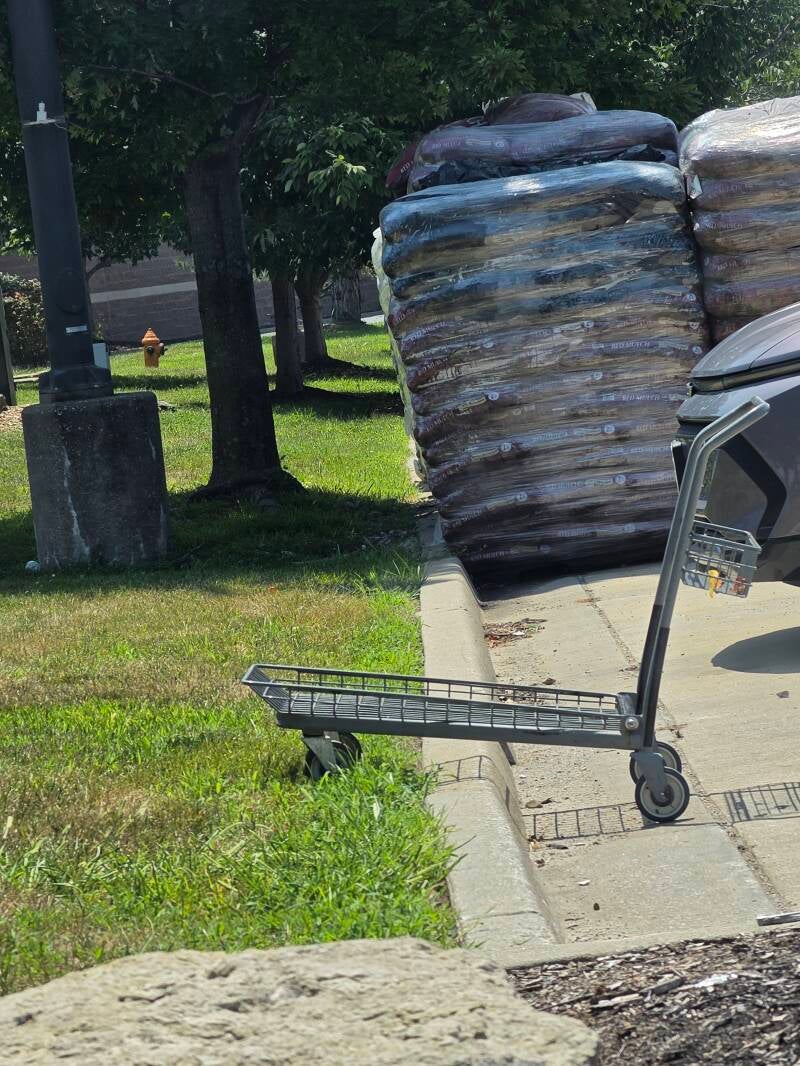
Today, on my way to Costco, I found myself watching shopping carts scattered across the parking lot. Some rested against cars. Others sat in landscaping or blocked traffic lanes. Many were only a few steps from the cart return, yet someone had decided those few extra steps were too much.
Years ago, I probably would have driven past without a second thought.
Today, I couldn't.
Not because of the carts themselves, but because they represented something larger.
When you've nearly lost something as precious as your eyesight, the ordinary no longer feels ordinary.
You begin seeing small choices.
Small habits.
Small acts of responsibility.
Or the absence of them.
A shopping cart may seem insignificant, but it asks a simple question:
What kind of person are you when no one is watching?
Life isn't built by the extraordinary moments alone. It's built by thousands of ordinary decisions that quietly shape who we become.
Returning the cart.
Holding the door.
Picking up a piece of trash that isn't yours.
Helping someone without expecting recognition.
These aren't grand accomplishments. They're small waves.
But every wave travels farther than the person creating it can see.
Maybe that's what my eyesight gave back to me.
Not just the ability to see...
But the ability to notice.
And sometimes, noticing is where change begins.


Written Waves:
Seeing What Was Always There
7/26/2026 @ 2:15 PM
There was a time when I wondered if I would ever see the world the same way again.
For fifteen months, my left eye became a reminder of every decision I had made about my health. Diabetes had weakened a blood vessel behind my retina until it finally burst. What followed wasn't darkness, but something almost worse. Halos of blood drifted wherever I looked, like a storm cloud that refused to move.
Every morning I woke up wondering if today would be the day I lost the rest of my vision.
My career depends on seeing details. As a route planner, I spend my days looking at maps, streets, delivery windows, and patterns. When my eyesight failed, so did my confidence. I found myself squinting at computer screens, making mistakes, and imagining a future I wasn't ready to face.
Depression has a way of shrinking your world.
Then one day, everything changed.
The surgeons found the real problem—a ruptured blood vessel behind my retina. When they repaired it, my sight slowly returned. It felt less like recovering my vision and more like recovering my life.
Something else changed too.
I began noticing things I had always driven past before.
Today, on my way to Costco, I found myself watching shopping carts scattered across the parking lot. Some rested against cars. Others sat in landscaping or blocked traffic lanes. Many were only a few steps from the cart return, yet someone had decided those few extra steps were too much.
Years ago, I probably would have driven past without a second thought.
Today, I couldn't.
Not because of the carts themselves, but because they represented something larger.
When you've nearly lost something as precious as your eyesight, the ordinary no longer feels ordinary.
You begin seeing small choices.
Small habits.
Small acts of responsibility.
Or the absence of them.
A shopping cart may seem insignificant, but it asks a simple question:
What kind of person are you when no one is watching?
Life isn't built by the extraordinary moments alone. It's built by thousands of ordinary decisions that quietly shape who we become.
Returning the cart.
Holding the door.
Picking up a piece of trash that isn't yours.
Helping someone without expecting recognition.
These aren't grand accomplishments. They're small waves.
But every wave travels farther than the person creating it can see.
Maybe that's what my eyesight gave back to me.
Not just the ability to see...
But the ability to notice.
And sometimes, noticing is where change begins.
Do you have a soulution to the issue?
Please drop a comment below. ✌️

Written Waves
Reading the Water
7/25/2026 @ 7:11 PM
Experienced boaters don't simply look at the water.
They read it.
A ripple may reveal a hidden stump. A change in color may signal deeper water. Wind creates one story. Current tells another.
Life offers those same clues.
Most people are so focused on reaching the destination that they stop paying attention to what the water is trying to teach them.
Slow down.
Observe.
Sometimes the smallest ripple contains the biggest lesson.
The answers we seek are often already in front of us.
We just haven't learned how to read the water.
Can you the read the water? ✌️
Written Waves
Still Water Doesn't Mean Nothing Is Moving
7/25/2026 @ 5:39 PM
On calm mornings, a lake appears motionless.
But beneath the surface, currents continue to move. Fish continue to feed. Plants continue to grow. Life never stopped simply because the surface became quiet.
People are much the same.
The loudest seasons of our lives often receive the most attention, yet the greatest growth usually happens during the quiet ones.
Just because no one sees your progress doesn't mean progress isn't happening.
Some of the strongest foundations are built in silence.
The surface may be calm.
Below it, your future is already taking shape. ✌️
Written Waves
The Wake You Leave Behind
7/25/2026 @ 3:45 PM
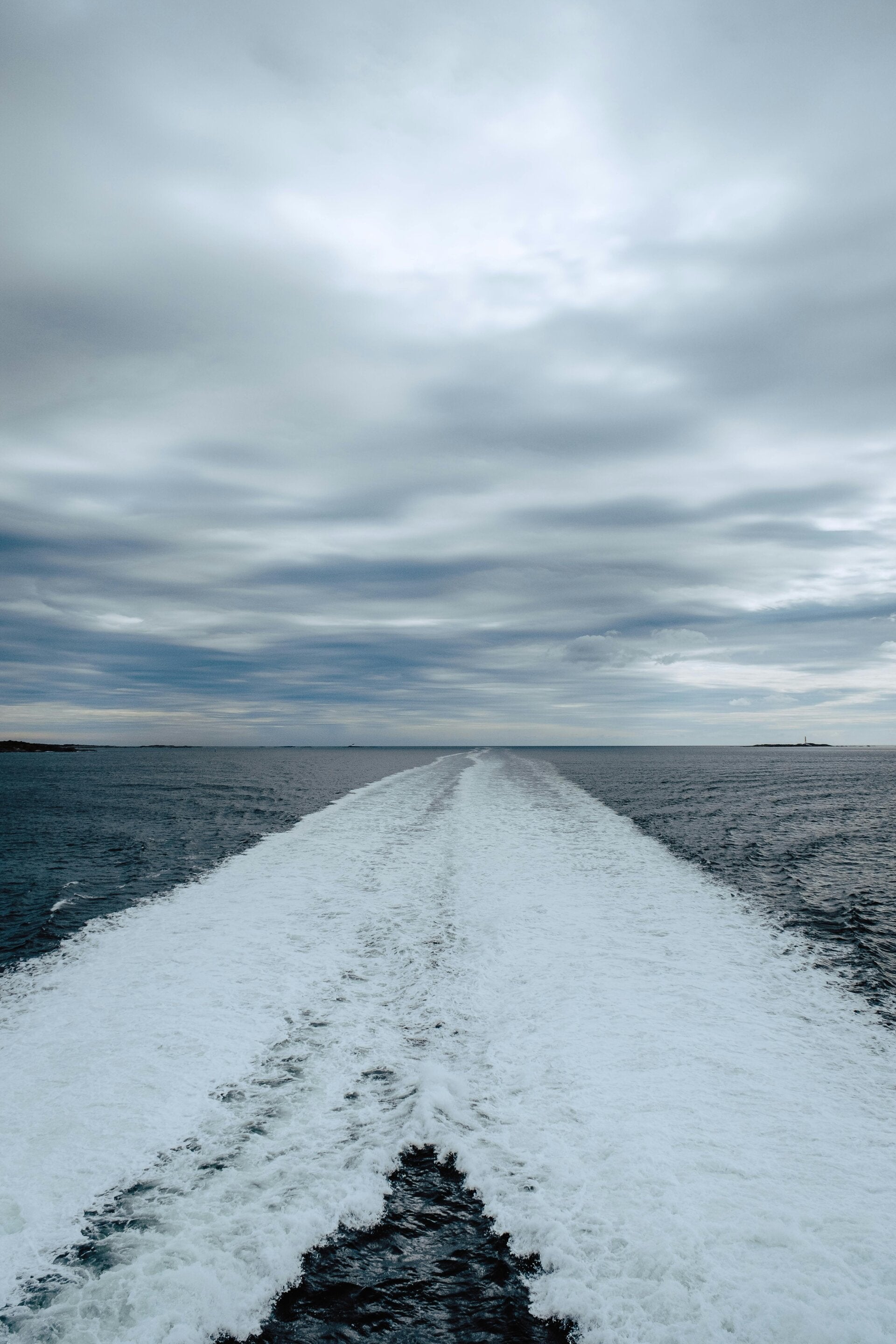
Every boat leaves a wake.
Some are barely noticeable. Others roll across the water long after the boat has disappeared from sight.
Our lives are no different.
Every conversation, every decision, every act of kindness, every moment of anger creates a wake that reaches people we may never meet. Most of the time, we never see where those waves end.
The interesting part isn't the size of the boat. It isn't the horsepower. It isn't the destination.
It's the wake.
Some people spend their entire lives trying to make a bigger splash, while others quietly create waves that carry generations forward.
The water doesn't care how important you think you are. It simply carries whatever energy you place into it.
Today, ask yourself:
If someone could only judge my life by the wake I leave behind. What would they learn about me?
What would they learn about you? ✌️

Written Waves
Who Is Standing on the Shore?
by Bert Russell
7/21/2026 @ 5:12 AM
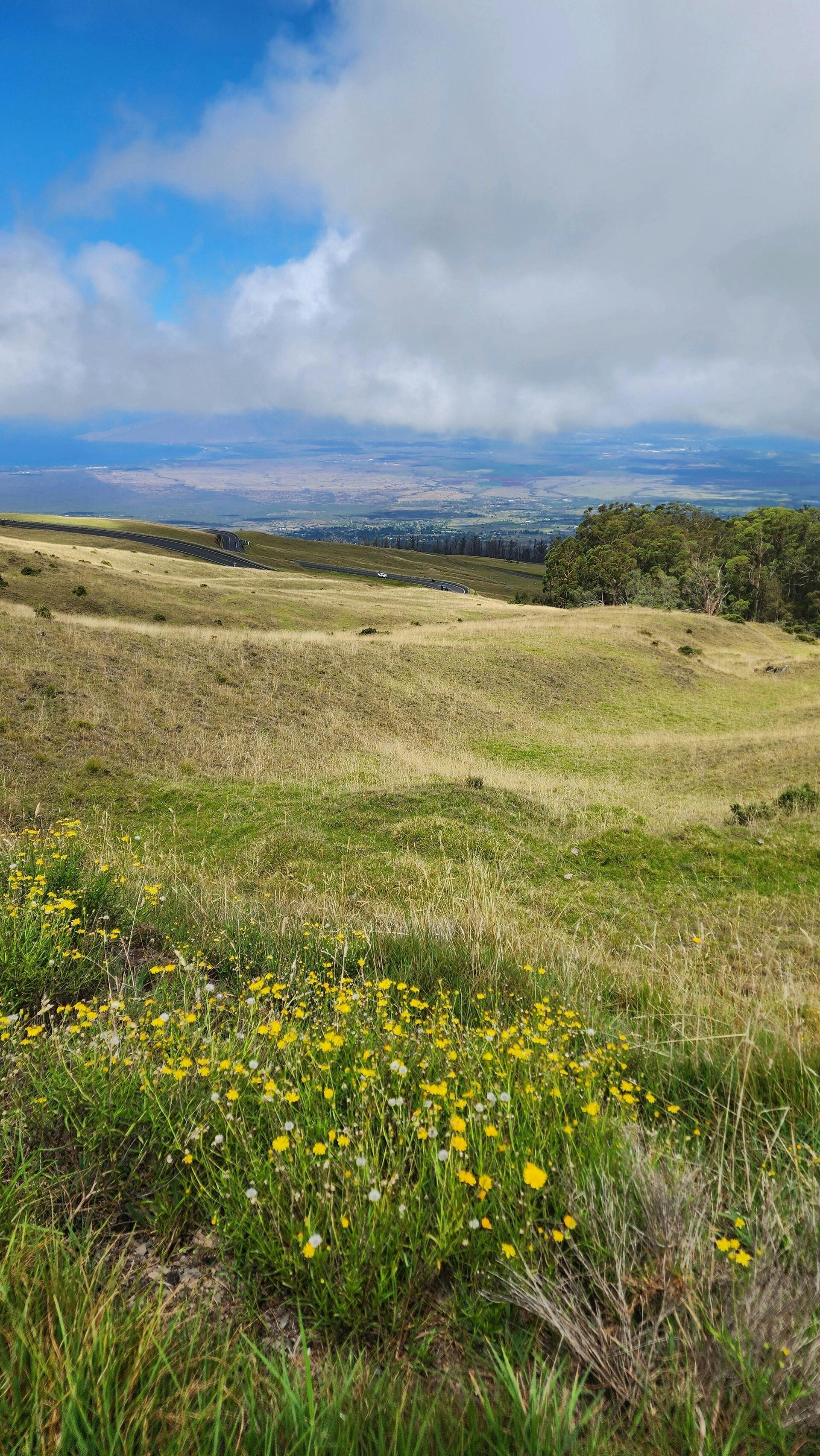
Some days I feel like I've spent my entire life walking. Sometimes it has been through the woods, where I couldn't see what was around the next bend. Other times it has felt like crossing open water, searching for a shoreline that always seemed just a little farther away.
My life has been an adventure. It has been one challenge after another. Looking back, I realize I wasn't just trying to survive those moments—I was collecting answers.
The strange part is that I now carry far more answers than questions.
So why do I still feel unsettled?
Maybe because I've reached a point where the question is no longer, "What have I learned?" The question has become, "Who needs to hear it?"
That question keeps me awake.
I don't know how much time I have left on this earth. None of us do. I don't want the lessons from my journey to disappear with me. If I have learned something that can make someone else's path a little easier, I believe it should be shared.
But shared with whom?
Young people trying to find their direction?
Someone who feels overlooked at work?
A father?
A business owner?
A person carrying the weight of regret?
Or maybe someone who simply needs to know they aren't the only one asking difficult questions.
The truth is, I don't know.
I question almost every step I take. I replay conversations in my mind. I wonder if I should have turned left instead of right. I examine my own reactions, sometimes more than I examine the situation itself.
I've learned that I can be defensive.
I can be stubborn.
Sometimes I hold on too tightly to my own perspective.
But I've also learned that those flaws don't cancel out my potential. They simply remind me that growth doesn't end when we become adults. It ends only when we stop listening.
I don't claim to have all the answers.
I simply have the answers that life has given me.
Maybe that's enough.
Maybe I don't need to know exactly who will read these words. A wave doesn't choose which shore it reaches. It simply continues moving forward, trusting that somewhere, someone will feel its impact.
Perhaps that's what writing really is.
Not knowing who is standing on the shore...
...but believing someone is.
So I'll keep writing.
I'll keep sharing what life has taught me.
I'll keep trusting that the right words will find the right person at the right time.
Because if even one life changes from something I've learned, then every mile, every challenge, every wrong turn, and every lesson was worth the journey. ✌️
Written Waves
The Scenic Route Home
By Bert Russell
7/19/2026 @ 9:55 PM
This morning we left Clarksville, Tennessee, at 6:45 a.m.
Before hitting the highway, we made one stop. We wanted to try Black Rifle Coffee because there wasn't a 7 Brew anywhere around Clarksville. We had never been there before, and it seemed like a good opportunity to try something different. My wife ordered an egg and chorizo burrito with a café mocha and an extra shot of espresso. Sometimes the best discoveries happen simply because our first choice isn't available.
As we headed west, traffic suddenly came to a stop.
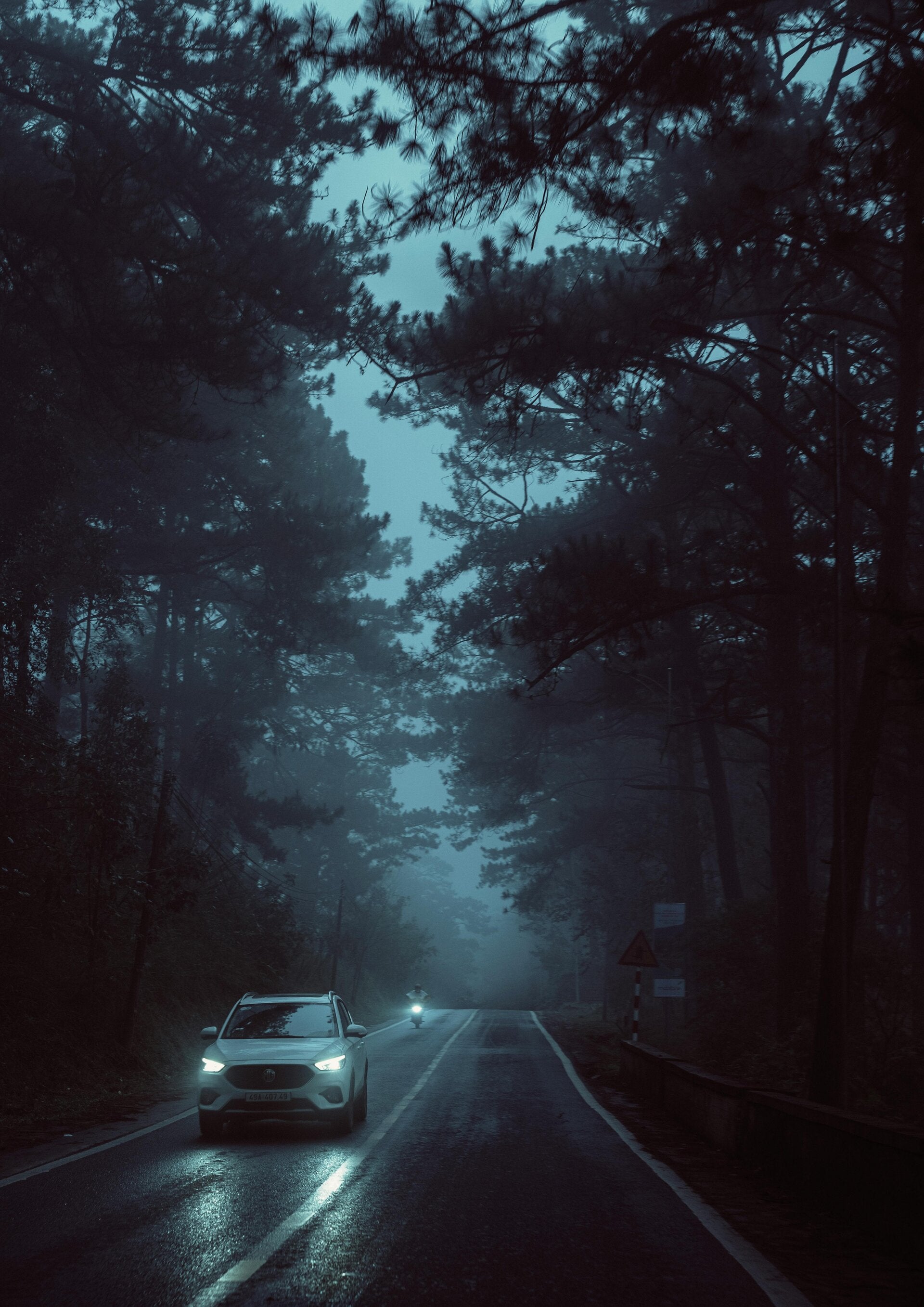
An accident and construction forced us off the interstate near Kingdom City, Missouri. Like everyone else, we found ourselves taking unfamiliar roads toward Jefferson City.
At first, it felt like an inconvenience.
Then something unexpected happened.
The back roads slowed us down just enough to notice things we would have missed on the interstate. Small towns. Rolling hills. Old barns. Fields stretching toward the horizon. Places that don't appear on most travel itineraries.
It made me think about life.
So much of our time is spent trying to find the fastest route to wherever we're going. We measure success by efficiency, speed, and staying on schedule.
But life doesn't always cooperate.
Sometimes an unexpected detour isn't there to delay us.
Sometimes it's there to show us what we've been driving past all along.
The interstate gets us to our destination.
The scenic route helps us appreciate the journey.
Looking back, some of the most meaningful moments in my life weren't planned. They came from wrong turns, unexpected conversations, and opportunities I never would have found if everything had gone according to schedule.
Maybe the destination was never the only point.
Maybe the road itself has been teaching us all along.
Peace of Mind. Peace of Body. Peace of Soul. ✌️
Written Waves
"Swimming With the Current"
7/19/2026 @ 6:40 AM
The night before, I told my sister Ellen I would take her to the airport at 3:00 a.m. I also told her I would pack the truck then.
She kept asking me, "Are you sure?"
The more she asked, the more annoyed I became.
"I've got it," I told her. "You won't miss your flight."
I wasn't worried about waking up. For the past nine months, I had been getting up around 2:00 a.m. Most people assume I wake up that early because I have to.
The truth is, I don't.
I wake up early because my mind never really goes to sleep.
For more than twenty-five years, transportation has trained my brain to think several moves ahead. Every day I build routes that have to work before the first truck ever leaves the dock. If one customer adds a pallet or two, capacity becomes an issue. If one trailer fills up, another route has to change. If a driver calls in sick, a truck breaks down, or the weather shifts, everything else shifts with it.
Transportation is a giant game of chess.
The board never stops moving.
I don't think about routes only while I'm at work. I think about them while I'm driving home, eating dinner, lying in bed, and sometimes while I'm sleeping.
Or trying to sleep.
Around 8:00 that evening, my wife suggested I pack before going to bed.
"I'm exhausted," I said. "I'll do it when I wake up."
I put an earbud in, turned on YouTube, and laid down.
Eight o'clock became ten.
Ten became midnight.
I never slept.
At least, I didn't think I did.
Then, at 3:15 a.m., someone pushed my shoulder.
I opened my eyes.
It was Ellen.
Shock.
Confusion.
Embarrassment.
I had slept straight through my alarm.
I jumped out of bed, apologized over and over, and told her to give me fifteen minutes. I stumbled into walls, rubbed my eyes, and tried convincing my body it was awake.
Nothing worked.
So I relied on adrenaline.
In seven minutes I showered, washed my hair, brushed my teeth, shaved, and got dressed.
I ran downstairs.
No keys.
Back up three flights.
In the commotion, I woke my wife.
As I searched for my keys, wallet, phone, and charger, I became angry with myself.
Not because I overslept.
Because I hadn't prepared.
I called myself lazy.
Looking back, that wasn't true.
I wasn't lazy.
I was drained.
There's a difference.
My wife, now awake and frustrated, looked at me and said, "George! Why do you always wait until the last minute?"
Before she could finish, I was already heading back downstairs.
On the first floor, I found my mother.
She had been awake most of the night packing coolers, organizing food, and making sure we had everything to take home.
That's who she is.
Always thinking about everyone else.
Outside, Ellen stood beside the truck smoking a cigarette.
I expected a lecture.
Instead, she gave me a look.
A look I had seen my entire life.
The same look my father used.
The same look my mother used.
Disappointment doesn't always need words.
Sometimes a look says everything.
I quietly muttered one word under my breath.
"Fuck!!!"
The first suitcase went into the truck easily.
The second one caught me by surprise.
It had to weigh over seventy-five pounds.
The moment I lifted it, my lower back reminded me I wasn't twenty-five anymore. Every muscle told me to let go.
I didn't.
Pride can be heavier than luggage.
Finally, we climbed into the truck.
About halfway to the airport, Ellen asked, "Do you know where you're going?"
"Yes."
I had been driving family members to that airport for over thirty years. I could visualize the route without thinking.
A few miles later she looked at her phone.
"Google says you're going the wrong way."
I doubted myself just long enough to pull into a gas station. I bought two Coke Zeros and opened Google Maps.
Google wanted me to take the business route.
So I did.
Google was right.
It got us there.
But it wasn't the route I would have chosen.
It took us through shopping centers, traffic lights, and businesses where almost nothing was open except a lonely Waffle House and a few gas stations. The speed limit bounced between twenty-five and forty-five miles per hour.
My route would have taken the bypass.
Fifty-five miles per hour.
Very few traffic lights.
Almost no interruptions.
Years of experience had taught me that route.
Google had learned a different one.
Ellen smiled because she trusted the blue line on her phone.
And that was enough for me.
As I drove home alone, I started thinking about the tides here along the South Carolina coast.
When the tide comes in, fish don't waste their energy fighting the current.
When the tide goes out, they don't fight that current either.
They adjust.
They use the movement of the water instead of trying to overcome it.
Nature understands something that humans often forget.
Not every current is an enemy.
Sometimes wisdom isn't proving you're right.
Sometimes wisdom is recognizing which current deserves your energy and which one doesn't.
That morning, I could have spent the entire drive proving my route was better.
Instead, I chose peace.
Ellen made her flight.
My promise was kept.
Like the fish riding the changing tide, I realized that life isn't always about swimming against the current.
Sometimes the strongest thing we can do is recognize the current we're in, adjust, and let it carry us where we need to go. ✌️
Written Waves
Friday's Round at Wachesaw
By Bert Russell
7/17/2026 @ 3:03 PM
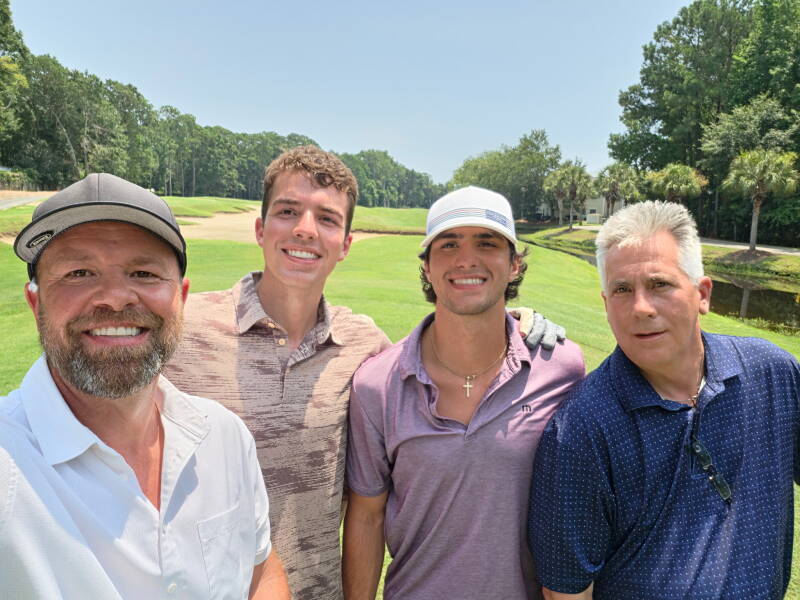
We finally finished our round of golf at 12:56 p.m. The scores were all over the place. I shot a 91, and Dean finished with a 90.
Dean and I are competitive, but it has never been the kind of competition where you hope the other person fails. We genuinely want each other to play well because great golf is simply more fun when everyone is playing their best. A little competition pushes both of us to be better.
Allen played exceptionally well on the front nine but lost his focus on the back. At one point, I honestly thought he might beat me on the front nine. In the end, we tied.
Emerson played streaky golf. He would follow an incredible shot with one that found the trees. The tree-lined fairways seemed to have a magnetic pull on him today, but every now and then he reminded everyone just how good he can be.
Dean's round fascinated me. He beat me by two strokes on the back nine after struggling more on the front. What impressed me most wasn't his score—it was his strategy. He never pulled his driver out of the bag once. Every tee shot was either a 3-wood or an iron. He played position golf, choosing accuracy over distance.
I took the opposite approach.
I pulled my driver on every hole except the par threes. These guys are much younger and stronger than this 54-year-old golfer, so I felt like I needed every yard I could get.
The first nine was rough off the tee. Other than the opening hole, I couldn't seem to find a fairway. I sprayed drives left, then right, yet somehow managed to keep scoring.
Then Allen handed me what looked like a senior citizen-sized tee.
"Here," he said, "so you can actually see the tee."
I knew exactly what he was doing. He was giving me grief, and I wanted nothing more than to make him eat those words. Instead, I couldn't hit a fairway with that giant tee to save my life. I still think someone had left it there on purpose because as soon as I threw it away and went back to my lucky little wooden tee, everything changed.
Maybe it was the tee.
Maybe it was the grip adjustment I had been experimenting with.
Whatever it was, I started finding fairways again. I still hit a few ugly shots, but they stayed in play and stayed in the air.
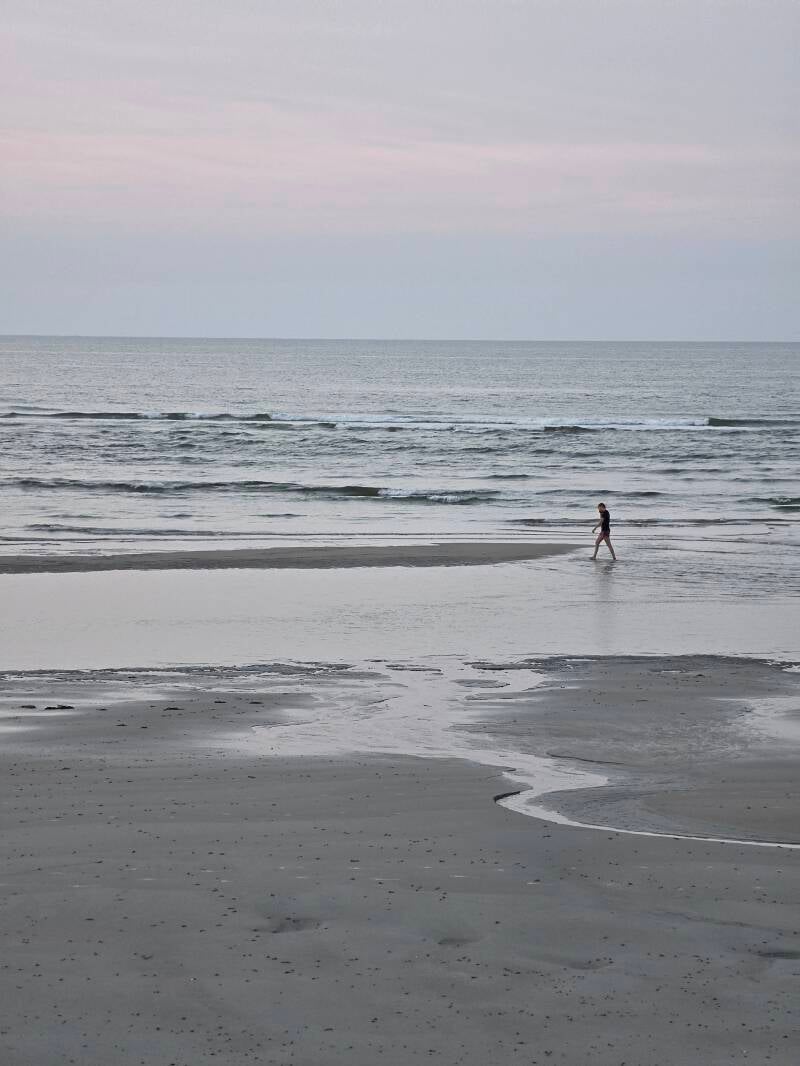
Several times I even played for wind that didn't exist. My brain kept expecting the ocean breeze to move the ball, even when the flags were hanging perfectly still.
One battle that never ended was with my hands.
The salty ocean air left them sticky all day long. Every chance I got, I searched for puddles to rinse them off. I even rubbed melting ice on my hands trying to remove the sticky feeling. As soon as they air-dried, the grip would feel wrong again, and I'd repeat the whole process on the next hole.
I struggled with my grip from the first tee until the last green, and most of my missed shots could be traced back to that one issue.
Thankfully, my putter kept me in the game, except for 1 hole in which I 3 putted for a double.
When everything else felt uncertain, the flat stick was dependable. It erased mistakes, saved pars and bogeys, and reminded me that golf isn't about playing perfect. It's about finding a way to score with whatever game you brought to the course that day. ✌️
Written Waves
"Friday Morning"
By Bert Russell
7/17/2026 @ 5:58 AM
Today is Friday.
I woke up early, before the sun even began to rise. It started like any other day in the transportation world, but today feels different.
Instead of focusing on routes and schedules, I'm heading to Murrells Inlet with my two nephews and my brother-in-law, Dean. We have an 8:12 a.m. tee time at Waccamaw Golf Club, and I'm genuinely excited to spend the morning with family.
I've had the privilege of watching my two nephews grow into amazing young men, each with their own personalities, quirks, and theories about life. Seeing them become good people is all I could ever hope for.
Dean and Catherine have done an incredible job raising their children. If I had children of my own, I hope I could have done even half the job they did.
Their daughter, Camy, will be a freshman at the University of Iowa this fall. She plans to study business, possibly with a concentration in accounting. I can't help but wonder if her interest in business was influenced by her older brother, Allen. That's a question I'll save for another day—maybe even ten years from now, after life has had a chance to write a few more chapters.
For now, today isn't about work or the future.
It's about family, laughter, a few good golf shots, and making memories together.
Today is going to be a great day.
✌️
Written Waves
A Day Beyond the Island
By Bert Russell
7/16/2026 @ 9:15 AM
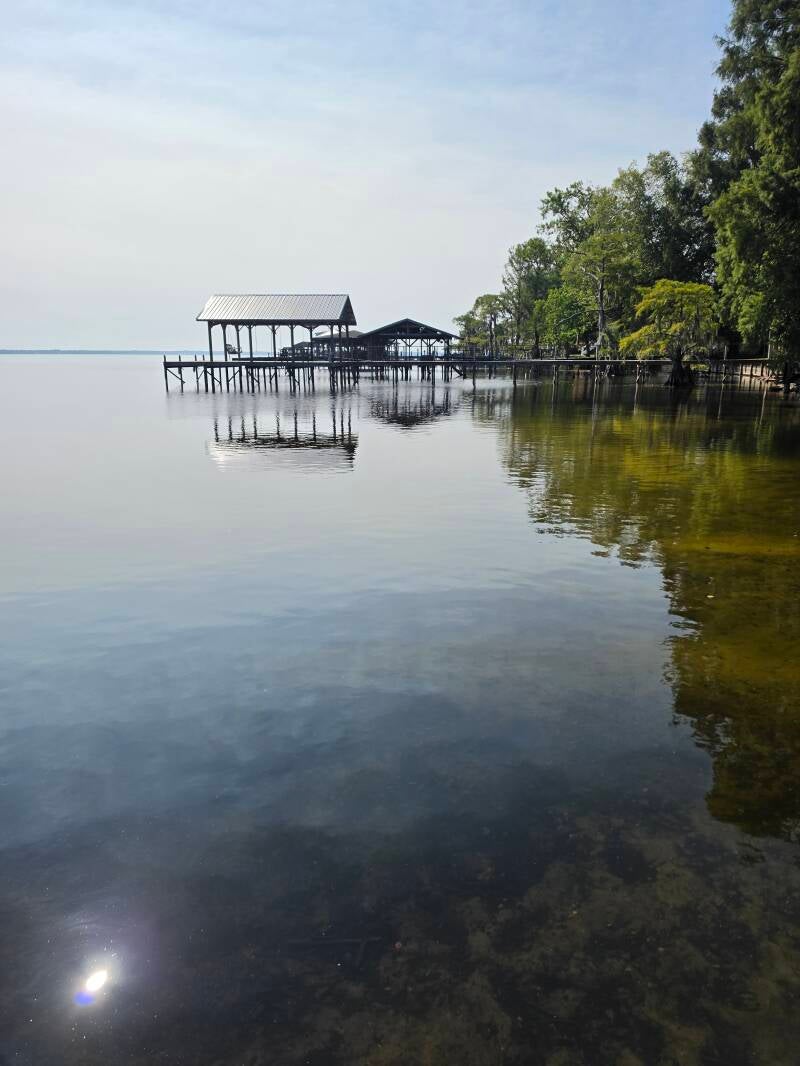
Today, we ventured away from the island and toodled around the mainland toward North Carolina. Our destination was Rock Hill, South Carolina, but like so many good adventures, we found ourselves taking a detour to Lake Waccamaw in North Carolina.
What a beautiful lake community.
The homes were surprisingly modest and unassuming, yet the real estate values reflected just how special the area is. It wasn't luxury that made the lake valuable—it was the peaceful setting. Secluded. Quiet. Timeless.
One thing that surprised me was how shallow the water appeared. I expected much deeper water, but instead I found remarkably clear water that allowed me to see schools of tiny baby bass swimming near the public dock and boat ramp. Watching them reminded me that every fish, no matter how big it eventually becomes, starts out small and vulnerable.
The lake itself was different from many lakes I've visited. It was almost oval in shape, with very few coves visible from where we explored. Along the shoreline stood towering trees draped in Spanish moss, many of them partially submerged, creating a landscape that felt both peaceful and mysterious.
Then there were the signs.
One warned visitors not to feed the alligators.
I couldn't help but laugh and think, Who would actually feed an alligator?
A few moments later I noticed another sign explaining why pets must remain on a leash. The explanation wasn't about courtesy or protecting neighbors. It simply stated that alligators don't recognize pets as unnatural prey.
That made me stop and think.
Back home in Missouri, nearly every town has leash laws too, but they rarely explain why. You're simply expected to know the rules. If your dog gets loose, you may receive a fine. Here, the reason wasn't about punishment—it was about survival.
The same rule. Two completely different reasons.
Sometimes the purpose behind a rule tells us more about a place than the rule itself.
By the end of the day, we had simply enjoyed exploring north of the island, taking the roads less traveled, and discovering another corner of the Carolinas. It wasn't a day filled with excitement or big events. It was a day filled with observations.
And sometimes those are the days that stay with us the longest.
Every place has something to teach us, if we're willing to slow down long enough to notice. ✌️
Written Waves
The Wrong Equipment
By Bert Russell
7/15/2026 @ 1:09 PM Eastern
Today I watched the tide change again.
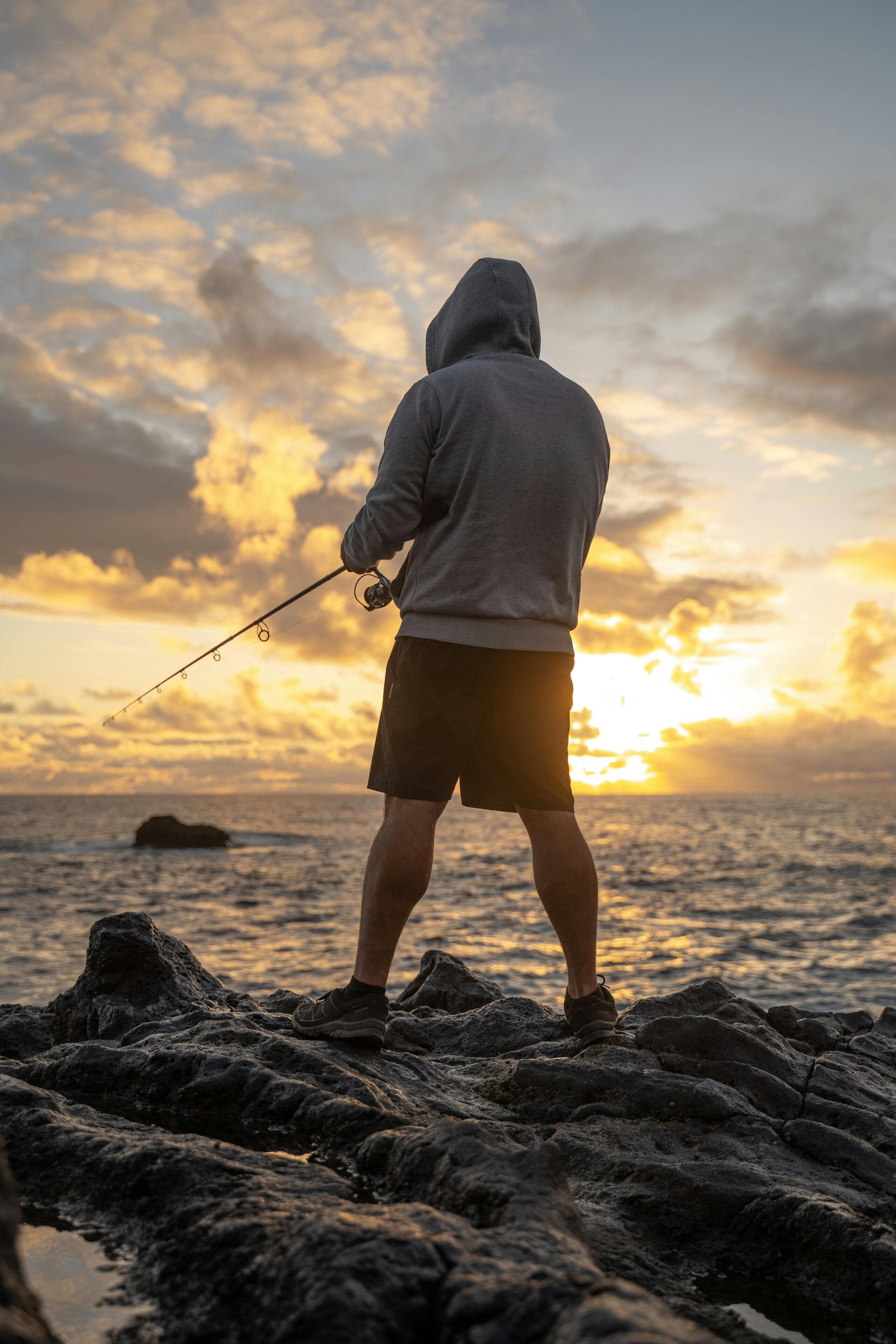
I decided to fish with lake equipment in saltwater. Looking back, it probably wasn't my smartest idea, but sometimes that's where the best stories begin.
I had a 4-pound test Zebco reel with a tiny closed-face spool and my biggest sinker weighed only four ounces. I built a leader with a pair of pliers and some jewelry wire I had brought along. It was ingenuity at its finest.
My first cast didn't last long.
The reel wasn't attached all the way to the rod. It flew off and landed right in the saltwater... of course, in front of a group of local fishermen who looked like they'd been fishing these waters their entire lives.
After retrieving the reel, I tried mounting it on an old saltwater rod I had bought at an estate sale. The reel was far too small for the giant rod, so once again I had to improvise. Survival mode kicked in. My slides were two sizes too big, and I wasn't about to make that long walk back.
Eventually I got everything held together.
I baited two treble hooks with chicken gizzards, took a running start, and let the weight do the work.
The line launched.
That tiny reel held like glue.
I must have cast nearly seventy-five feet into the middle of the canal.
I settled into my chair, placed the rod in its holder, and took a deep breath.
The smell of salt filled the air.
It's an aroma unlike anything in the Midwest.
When I was a kid, I hated that smell.
At fifty-four, I love it.
Some things don't change.
Some things change completely.
I watched cranes and seagulls glide overhead with purpose, almost as if they were following an invisible flight plan. The ducks simply surrendered to the current as it carried them toward the mouth of the canal. When they reached the incoming surf, they climbed out, walked along the beach, and slipped back into the calm pools where they wanted to be.
There was no panic.
Just patience.
I dipped my toe into the water. Tiny fish swam over and gently nibbled at my dry skin before the current carried them away again.
Then I noticed my rod tip.
Bounce...
Bounce...
Bounce.
I grabbed the rod and pulled back.
The line instantly screamed toward the sea.
As I reeled, I felt another fish hit the second hook.
Now two fish were pulling in opposite directions while the tide, driven by the moon itself, was pulling harder than either of them.
The line kept heading toward the ocean.
I cranked the reel as fast as I could.
Click.
Click.
Click.
Click.
The drag.
I forgot to tighten the drag.
The fish were heading toward the rocks.
I pulled harder, reeling as fast as I could, sweeping the rod from side to side, trying to keep them away from the structure.
Suddenly...
Nothing.
The line went completely slack.
"Darn," I thought. "I lost them."
I started reeling anyway.
The reel turned effortlessly, as if nothing remained except four ounces of lead and two hooks.
Then, out of nowhere...
The line came alive again.
The fish took off with the current so fast that my little reel couldn't stop them.
The drag screamed.
The rod bent.
My heart raced.
It was one of those moments you never forget.
I thought to myself, If only Dean could see me bringing these fish to shore.
Then...
Everything stopped.
I pulled harder, convinced the fish had finally given up.
Nope.
The treble hooks had buried themselves into a huge submerged branch that the tide had been hiding from me all along.
I pulled.
Nothing.
I changed angles.
Nothing.
One last hard pull...
Snap!
The line broke.
There I stood, in front of the same local fishermen who had already watched my reel fly into the saltwater on my first cast.
I had lost two fish, two treble hooks, four ounces of weight, and my homemade leader... all because of one hidden branch.
It was embarrassing.
But as I stood there laughing at myself, I realized something.
I had spent the afternoon trying to fish the ocean with equipment meant for a lake. I had improvised with jewelry wire, a tiny Zebco reel, an oversized saltwater rod, and chicken gizzards for bait. None of it was what experienced fishermen would recommend.
Yet for a few unforgettable moments...
I had two fish on the line.
Sometimes success isn't measured by what you bring home.
Sometimes it's measured by what you experience along the way.
The fish escaped.
The branch won.
The tide kept changing.
And I walked back with empty hooks...
...but a full heart. ✌️
View Bert Russell's written Waves series -
Take the Journey with him - July 2026 by date and time.
Discover Bery Russell's philosophies of his learning progress - A lifetime of curiosity's?


Written Waves
Life is easier to understand from the water
By Bert Russell
7/13/2026 @ 3:27 AM
This morning I woke up at 3:11 a.m. with one of the worst hangovers I've had in years.
To be honest, I don't remember much about yesterday. I must have blacked out because most of the day is a blur. The only thing I clearly remember is being on the golf course.
Strangely enough, I was hitting the ball well off the tee. My putting, however, was another story. One putt would roll straight into the center of the cup, and the next would miss so badly it felt like I was back in grade school learning the game for the first time.
That feeling reminded me of my father.
When he taught me to play golf, he was relentless about the fundamentals. One lesson still echoes in my mind:
"Don't get wristy."
At the time, I didn't fully understand what he meant. He wasn't trying to make golf harder. He was trying to teach me that a good swing comes from balance, rhythm, and letting your body work together instead of forcing the shot.
Years later, I still hear his voice every time I step onto the first tee.
Life has a way of doing the same thing.
When we're overwhelmed, distracted, or even dealing with the consequences of our own poor decisions, we don't usually perform at our best. We fall back on what we've practiced the most.
That's why fundamentals matter.
Whether it's golf, work, relationships, or simply becoming a better person, the basics are what carry us through when everything else feels uncertain.
The older I get, the more I realize my father wasn't just teaching me how to swing a golf club.
He was teaching me how to live.
Sometimes the greatest lessons don't come from our best days.
Sometimes they come from remembering the voices that taught us to return to the fundamentals.
— Bert Russell
Written Waves
"Life is easier to understand when viewed from the water."
Written Waves
The One Wave
by Bert Russell
Date and Time: 7-8-2026 @ 6:41 AM
Every time I hear another story about someone I care about, I quietly drift back to a place I know all too well.
The details are different. The names are different. The reasons are different.
But the feelings...
The feelings are familiar.
I've known what it feels like to believe nothing is getting better. I've lived through days when I felt helpless and nights when I wondered if life would ever feel normal again. I remember believing tomorrow would simply become another repeat of today.
If you've ever been there, you know how heavy those thoughts can become.
So before I say anything else, I want you to hear this.
If you're tired, you don't have to face the ocean alone. There are people willing to stand in the water beside you until you're ready to catch the next wave.
Life is a lot like learning to ride a boogie board.
You paddle toward wave after wave. One crashes over your head before you even get started. Another flips you upside down. Salt water fills your nose. You lose your board. You stand back up, wondering why everyone else seems to make it look so easy.
Then another wave comes.
You fall again.
And another.
Eventually, you begin asking yourself a dangerous question:
"Why do I keep trying?"
Because somewhere beyond those crashing waves is the one you've been waiting for.
Nobody learns to ride a boogie board on the first attempt. They learn because they keep walking back into the water. Sometimes the victory isn't riding the wave. Sometimes the victory is simply refusing to walk back to the beach.
Sometimes all you can manage is one more step into the water.
Sometimes all you can do is hold onto your board.
Sometimes all you can do is breathe.
And that's enough.
Then one day...
A wave arrives that feels different.
You paddle.
You commit.
You catch it.
Instead of crashing over you, it lifts you.
For a few beautiful moments, you're no longer fighting the ocean.
You're riding with it.
Those few seconds don't erase every wipeout that came before, but they remind you that the ocean wasn't trying to destroy you. It was teaching you balance, patience, resilience, and perseverance.
Life often works the same way.
Some days success isn't measured in miles.
It's measured in inches.
Sometimes all we can manage are baby steps, and that's okay. A baby step is still a step forward.
So if today feels like another wave has knocked you down, don't stay there.
Lift your head.
Take one more breath.
Take one more step.
Keep walking.
Keep paddling.
Your story doesn't end with the wave that knocked you down.
It ends with the wave you finally learn to ride.
And when that day comes, you'll discover something you never noticed while you were struggling.
Every wave before it was preparing you for the one that would finally carry you home.
Written Waves
Echoes Across the Pacific
by Bert Russell
Date and Time: 7-5-2026 @ 1:58 PM
The older gentleman looked at me and smiled.
"So...what did you learn?"
I laughed.
"I learned the older you get, the more sounds a person makes."
He laughed even harder.
"I could've told you that when I was five."
For a few seconds we were simply two strangers laughing in a Costco restroom over something everyone experiences but nobody wants to discuss.
Then we walked away.
I've thought about that conversation more than I probably should have.
Maybe because it reminded me of waves.
Meteorologists can watch a powerful storm develop thousands of miles away over the western Pacific Ocean. A typhoon spinning near China or Japan transfers energy into the ocean with every hour its winds blow across the surface. The longer the storm blows and the farther the wind travels over open water—a distance oceanographers call the fetch—the more energy is stored in the waves.
Those waves don't race toward California as giant walls of water.
The water mostly stays where it is.
The energy begins a journey.
Long-period swells often travel between 450 and 600 miles every day, crossing nearly 6,000 miles of open Pacific in roughly ten to fourteen days. Along the way they pass storms, calm seas, cargo ships, whales, islands, and millions of people who never realize something is moving beneath them.
By the time those swells finally reach California, the storm that created them may already be gone.
The sky over China might be blue again.
The fishermen have returned to work.
The rain has stopped.
Yet the energy continues its journey until it finally arrives on a beach where someone watches surfers paddle into waves that were born on the opposite side of the world.
Life works much the same way.
The words someone spoke to us as a child.
A teacher who believed in us.
A parent who lost their temper.
A friend who stayed.
A stranger who smiled.
None of those moments seem very large when they happen.
But they leave behind energy.
Sometimes it takes years before that energy reaches the shoreline of our lives.
The funny part is that aging works the same way.
The creaky knees aren't from today.
The stiff back isn't from this morning.
The strange sounds our bodies make in a public restroom aren't because of breakfast.
They're echoes from thousands of yesterdays.
Years of lifting.
Years of working.
Years of stress.
Years of healing.
Years of simply living.
Every mile leaves behind a little energy.
Eventually it reaches shore.
The older gentleman wasn't making more noise because he was old.
He was making noise because he'd traveled farther.
His body had crossed oceans mine hasn't crossed yet.
Maybe that's why I enjoy watching waves.
When I stand on a beach, I know I'm looking at history.
That swell didn't begin here.
Someone standing on another shoreline, thousands of miles away, unknowingly witnessed its birth almost two weeks ago.
We only see the ending.
Rarely do we appreciate the journey.
Maybe that's true for people too.
Every person we meet is carrying waves that began long before we ever knew their name.
Written Waves
Fear of Success
by Bert Russell
Date: 7/4/2026 @ 4:41 AM
People often talk about the fear of failure. I have lived much of my life fearing something different. I have feared success.
Not because I was afraid of working hard, but because success meant change. It meant becoming someone I had never met before. It meant leaving behind the version of myself that spent years trying to fit into a world that never quite felt right.
For most of my life I searched for where I belonged. Sometimes I changed who I was just enough to blend in. The strange part was that every time I became someone else, I liked myself a little less. I learned that pretending is exhausting, and eventually your own reflection begins to look unfamiliar.
My greatest joy has never been collecting things. It has been discovering forgotten stories.
Estate sales have always fascinated me. Every house tells a story. Every photograph, every tool, every handwritten recipe card belonged to someone who laughed, struggled, loved, and eventually left this world. Their belongings become waves washing back onto shore, waiting for someone else to appreciate them.
I also love marketing, building maps, measuring progress through KPIs, teaching others, and creating systems that make life better. They seem like unrelated interests, but they all share one purpose—they help people move forward.
Above everything else, I seek peace.
Real peace cannot exist if we spend our lives pretending to be someone we are not.
Life is like standing on a paddleboard in open water. The lake is never perfectly calm. Small waves constantly shift beneath your feet. The secret isn't learning how to stop the waves. The secret is learning how to balance while they continue moving.
Every experience becomes another wave beneath us.
Some push us backward.
Some carry us farther than we expected.
Some teach us balance.
I don't know exactly who I am becoming. I don't think anyone truly does. But every day I paddle a little farther from the shoreline of who I used to be.
When my journey finally reaches its last wave, I hope I can honestly say that I spent my life becoming the best version of myself—not someone everyone else wanted me to be.
The waves never stop.
Neither should we.
Written Waves
- When the Water Is Too Calm -
by Bert Russell
Date: 7/3/2026 @ 11:26 PM
It was Friday before the Fourth of July weekend, and something felt off.
I had the day off.
That shouldn't have seemed strange, but it did. The post office was still delivering mail. Banks had adjusted their schedules. Businesses were open, while others had already closed. Everything was just a little different than what my mind expected.
I found myself trying to make sense of it.
Is today a workday? Is it a holiday? Why is this place open while that one is closed?
The more I thought about it, the more I realized it wasn't the schedule that bothered me. It was the interruption of a pattern.
Our minds become comfortable with routines. We stop questioning them because they become part of the current that carries us through the week.
Paddle boarding teaches a similar lesson.
Most people think the challenge comes from the rough water. It doesn't.
The strange feeling comes when the water is almost perfectly calm.
Without waves, wind, or current, your brain loses many of the reference points it normally uses to stay balanced. Every tiny movement becomes noticeable. Every shift of your weight feels larger than it really is. You begin making corrections that aren't necessary, and sometimes those unnecessary corrections are what cause you to lose your balance.
Life works the same way.
When our normal routine changes—even for something as simple as a holiday weekend—we start looking for reasons. We question things that usually don't deserve our attention. We become uncomfortable, not because anything is wrong, but because our expectations no longer match reality.
The best paddle boarders don't fight every little movement beneath their feet.
They relax.
They trust the board.
They let their body adapt to the conditions instead of forcing the water to behave the way they expected.
Maybe that's the lesson this Fourth of July weekend gave me.
Not every unexpected day needs an explanation.
Sometimes life simply reminds us that our routines are only routines because we've become accustomed to them. Change isn't always a warning. Sometimes it's just a different current carrying us in the same direction.
So whether you're standing on a paddle board or standing in line wondering why today feels different, remember this:
Balance doesn't come from everything staying the same.
Balance comes from learning to stand steady when it doesn't.